Source variability
Verify seawater or brackish-water chemistry, temperature, turbidity, source yield and seasonal intake conditions.
ISLANDS & REMOTE AREAS · INDEPENDENT WATER PRODUCTION
Plan source reliability, seasonal demand, storage, availability, power and logistics as one independent water-supply system.
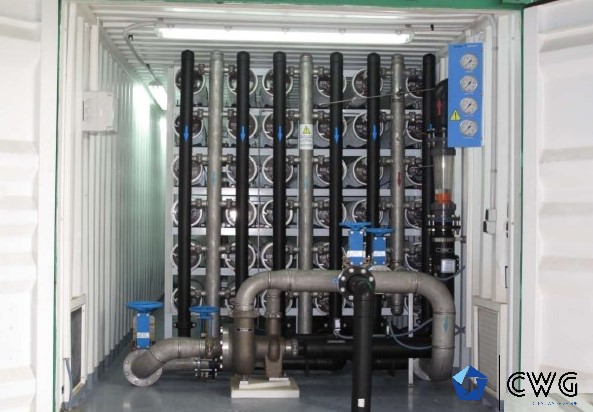
The source, production trains, storage and utilities must continue to support the required service when access, demand, weather or equipment availability changes.
REMOTE-SITE DESIGN BASIS
Resolve the operating reality first; then select the preliminary DESAL route.
Verify seawater or brackish-water chemistry, temperature, turbidity, source yield and seasonal intake conditions.
Separate permanent demand, visitor peaks, commercial uses and future growth instead of using one annual average.
Define usable storage for hourly peaks, planned maintenance, weather events and accepted production interruptions.
State the output that must remain available when one train or shared component is offline.
Delivery access, lifting, consumables, chemicals and critical-spares strategy must fit the remote location.
Automation, alarms, sampling, service access and operating documentation must match the local team.
SEAMASTER PLATFORM PATH
Published capacity ranges are preliminary routing boundaries. Final equipment, recovery, energy use, redundancy and performance require verified project data.
Open product catalogIsland wells and boreholes where the measured feed fits a published BWRO conductivity configuration.
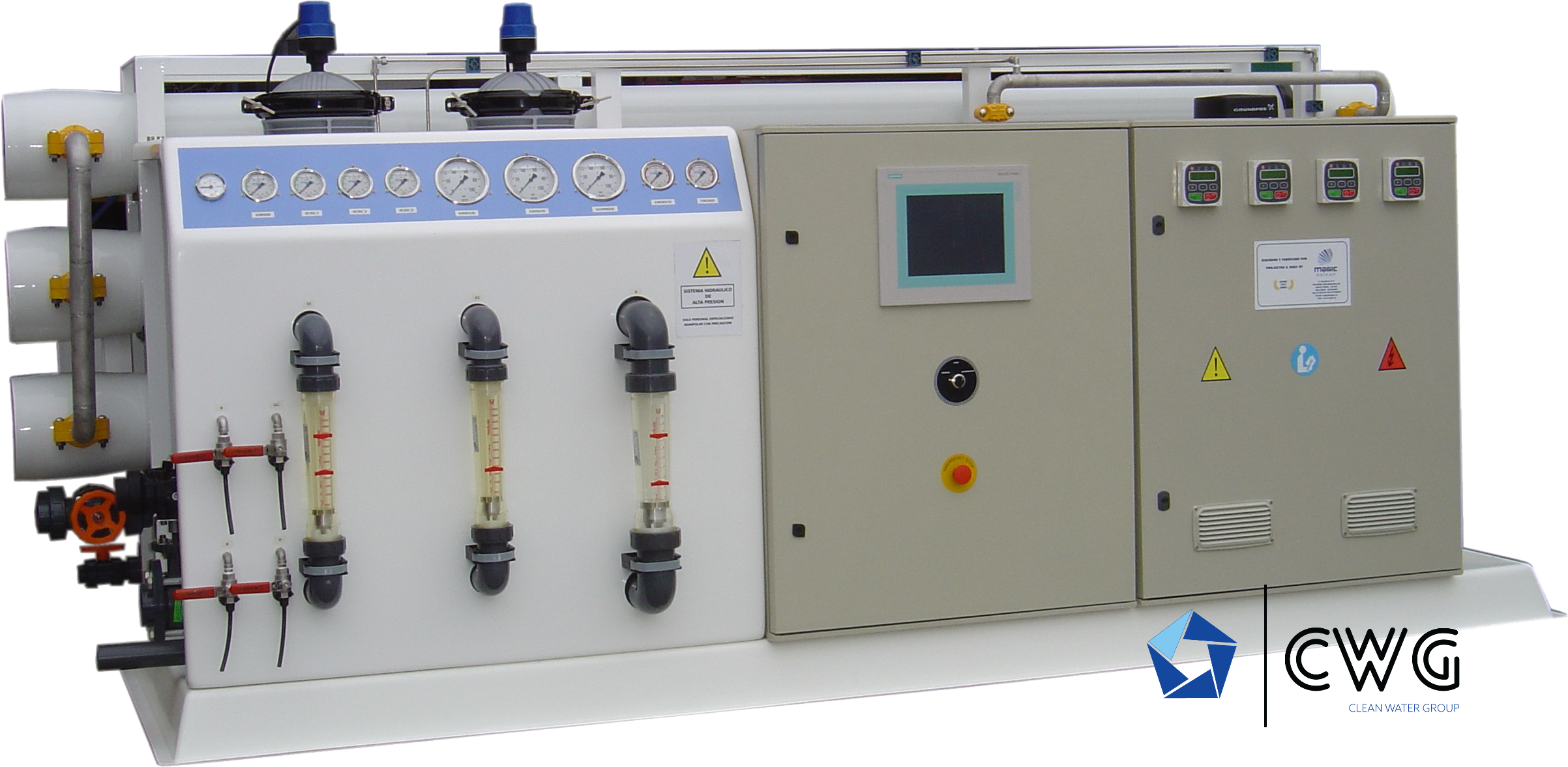
Explore platformCompact production for properties, small facilities and distributed island installations.
Explore platformEngineered island supply where intake, pretreatment, redundancy, storage interfaces and controls must work as one plant.
Explore platformContainerized delivery where factory integration, weather protection and reduced site assembly are project priorities.
Explore platformAUTONOMY ARCHITECTURE
Each layer can become a shared dependency. Define the accepted outage before assigning reserve or standby equipment.
Intake or well reliability, seasonal variation, source yield, feed tank and raw-water pumping.
RO train configuration, planned operating hours, cleaning allowance and approved reserve philosophy.
Usable treated-water volume, peak-hour service, planned outage coverage and turnover control.
Power quality, backup power, chemical supply, communications and remote-support interfaces.
Availability rule: specify how much treated-water output must remain available during the largest credible planned or unplanned outage, then test every shared component against that requirement.
POWER & OPERATING CONTINUITY
Define voltage, frequency, power quality, generator or grid availability, starting loads, communications and restart philosophy together with the production and storage plan.
Open engineering calculatorsVerified supply characteristics and available connected load.
Accepted outage, storage cover and project-defined backup power.
Alarm handling, automatic restart and remote-support interfaces.
Use only system-specific consumption from the approved proposal.
 PROJECT DATA · VERIFIED BEFORE SELECTION
DATA FOR CONCEPT DESIGN
ISLAND & REMOTE-SITE FAQ
No. Population is only one demand input. Include permanent and seasonal occupancy, hospitality, public facilities, commercial uses, irrigation where treated water is required, distribution losses, operating hours, storage and other available water sources.
Use the actual source-water analysis. A suitable island well may follow a DESAL-BWRO route, while a marine intake follows DESAL-SWRO. Source sustainability, seasonal chemistry and intake reliability must be verified before selection.
There is no universal value. The project owner must define the interruption that storage should cover, considering demand profile, alternative sources, weather access, maintenance strategy, power availability and the selected redundancy architecture.
No. BOX DESAL is useful when factory integration and reduced site assembly are priorities. Transport route, crane access, civil works, intake, discharge, product storage and site utilities still determine whether containerized or skid delivery is the better solution.
The electrical architecture must be engineered around power quality, starting loads, operating continuity, storage and any grid, generator or battery interface. This page does not assume a universal direct renewable-power configuration.
READY TO PLAN INDEPENDENT WATER SUPPLY?
We will identify the correct DESAL route and the data required for a project-specific concept.