ENGINEERING KNOWLEDGE CENTER · FROM QUESTION TO DESIGN BASIS
Better project data.
Faster technical decisions.
Use practical SEAMASTER guidance to classify source water, calculate preliminary production, select a DESAL route and prepare an engineering inquiry.
KNOWLEDGE CENTER10 ENGINEERING PATHS
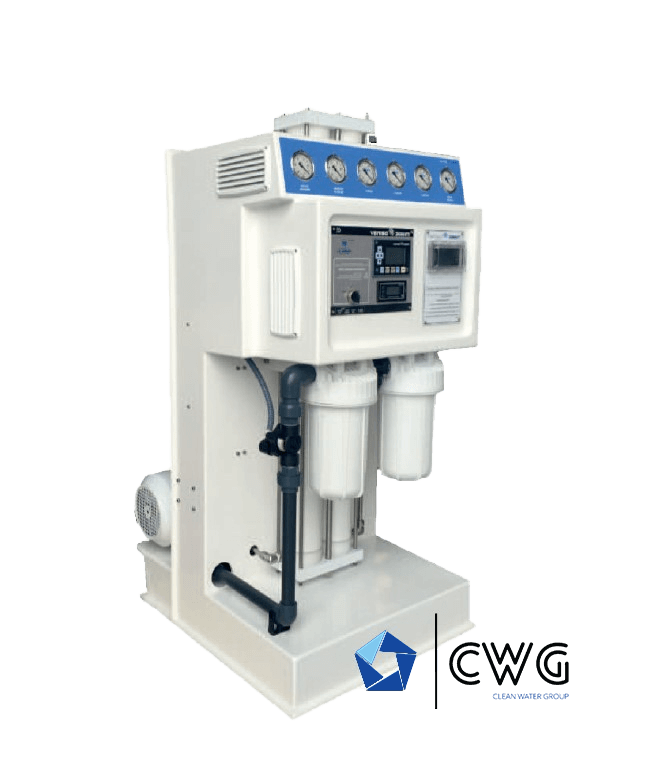
DATA BEFORE EQUIPMENTSOURCE · DEMAND · QUALITY · SITE
Water firstVERIFIED SOURCE DATA
Transparent sizingDEMAND ÷ HOURS
6 product routesCOMPACT TO CONTAINERIZED
Project checklistCOMPLETE INPUTS
Engineering gateFINAL CONFIGURATION VERIFIED
QUICK ANSWER04
Every useful inquiry starts with four connected inputs.
Define the source water, treated-water demand, required product quality and site conditions together. Product selection becomes reliable only when these inputs describe the same operating case.
TECHNICAL RESOURCE PATHS
Choose the question you need to solve.
Each guide moves one project decision from assumption toward a verifiable design input.
01
SELECTION GUIDEHow to Choose a Desalination System
Compare water analysis, production hours, installation and the confirmed proposal scope.
Open guide02
KNOWLEDGE CENTERKnowledge Center & Data Policy
Browse technical guides and understand approved prices, sources and missing-data boundaries.
Open guide03
NEW APPLICATION GUIDECamp Desalination Sizing
Build phased demand, production hours, storage and a verified equipment route without universal per-person assumptions.
Open guide04
NEW TECHNICAL GUIDEWhat Is Brackish Water RO?
Understand conductivity, TDS, applications, pretreatment risks and the verified DESAL-BWRO Q, XP and KP routes.
Open guide05
NEW SWRO GUIDESeawater RO Pretreatment
Connect intake risk, turbidity, SDI, chemistry, filtration and monitoring to a defensible membrane-protection strategy.
Open guide06
NEW ENERGY GUIDEDesalination Energy Recovery
Understand concentrate pressure recovery, device routes, whole-plant comparison and lifecycle economics without generic savings claims.
Open guide07
START WITH THE SOURCEWater Analysis Guide
Understand which source-water parameters influence pretreatment, recovery, membranes, materials and final water quality.
Open guide08
SIZE THE SERVICECapacity & Storage
Convert daily treated-water demand and realistic operating hours into preliminary RO output and storage duty.
Open guide09
CLASSIFY BRACKISH WATERConductivity Classes
Route verified brackish water through Q, XP or KP catalog boundaries without treating one reading as a final design.
Open guide10
MATCH THE PLATFORMProduct Route Map
Compare DESAL YACHT, DESAL-BWRO, DESAL-SWRO XL and BOX DESAL SWRO starting points.
Open guide11
PREPARE THE INQUIRYProject Data Checklist
Prepare the information needed for a useful engineering review and identify missing project interfaces early.
Open guide12
ALIGN THE LANGUAGERO Technical Glossary
Use consistent definitions for permeate, concentrate, recovery, flux, SDI, CIP, duty/standby and battery limits.
Open guideWATER ANALYSIS GUIDE
A laboratory report must describe both chemistry and operating reality.
A single conductivity or TDS value can route a preliminary search, but it cannot define scaling, fouling, materials, product quality or pretreatment by itself.
Send analysis for reviewDissolved chemistry
Conductivity, TDS, pH and alkalinityCalcium, magnesium, sodium and potassiumChloride, sulphate, bicarbonate, nitrate and silicaFouling risks
Turbidity and SDI where availableIron, manganese and suspended solidsOrganics, microbiology, oil or process contaminationFinal duty
Required product-water qualityDrinking, irrigation, hospitality or process usePost-treatment, blending and distribution conditionsCAPACITY & STORAGE GUIDE
Separate daily production from short-term consumption.
Use this formula for an initial production target, then add a justified reserve and test the result against storage, peaks, downtime and future demand.
TREATED WATER REQUIRED PER DAY÷REALISTIC RO OPERATING HOURS=MINIMUM NOMINAL PRODUCTION
Daily water balance
Add all uses that require treated water. Separate average day, peak day, seasonal demand and emergency duty.
Production window
Do not assume 24 uninterrupted hours. Include flushing, maintenance, cleaning, power limits and source availability.
Storage duty
Use storage to absorb hourly peaks and planned interruptions; verify usable volume, turnover and distribution pumping.
Design reserve
Add reserve only after stating what it covers: uncertainty, growth, downtime, train availability or source variability.
BRACKISH-WATER CONDUCTIVITY
Use measured conductivity as a routing boundary, not a complete design.
These public catalog classes identify possible DESAL-BWRO families. Final configuration still depends on the complete analysis, required output, temperature, product-water target and recovery.
Explore DESAL-BWRO≤ 4,400 µS/cmDESAL-BWRO KP
WHL is the lowest published KP conductivity configuration.
4,401–6,000 µS/cmDESAL-BWRO Q / XP / KP
Catalog route depends on output and the matching conductivity configuration.
6,001–10,000 µS/cmDESAL-BWRO Q / XP / KP
Q reaches its public catalog boundary; XP and KP remain available by configuration.
10,001–15,500 µS/cmDESAL-BWRO XP / KP
Higher brackish-water duty; verify product quality, pressure and recovery.
15,501–22,000 µS/cmDESAL-BWRO KP
Upper KP brackish-water catalog envelope; project verification is mandatory.
> 22,000 µS/cmEngineering review
Do not extrapolate BWRO catalog models. Confirm whether an SWRO-engineered route is required.
PRODUCT ROUTE MAP
Start with source class, output and operating duty.
These are public platform boundaries for preliminary comparison. Model configuration and guaranteed performance follow engineering review.
| SEAMASTER family | Production envelope | Feed-water route | Typical starting use | Open |
|---|---|---|---|---|
| DESAL YACHT | 30–110 L/h | Seawater | Yachts and boats | View family |
| DESAL-BWRO Q / XP | 22.5–125 L/h | Verified brackish water | Homes and small facilities | View family |
| DESAL-BWRO KP | 164–2,500 L/h | Verified brackish water | Commercial, irrigation and industry | View family |
| DESAL-SWRO PM / PM-C | 62.5–1,250 L/h | Seawater | Villas, hotels and islands | View family |
| DESAL-SWRO XL | 36–600 m³/day | Project-verified seawater | Industrial and utility duty | View family |
| BOX DESAL SWRO | 100–1,200 m³/day | Project-verified seawater | Containerized infrastructure | View family |
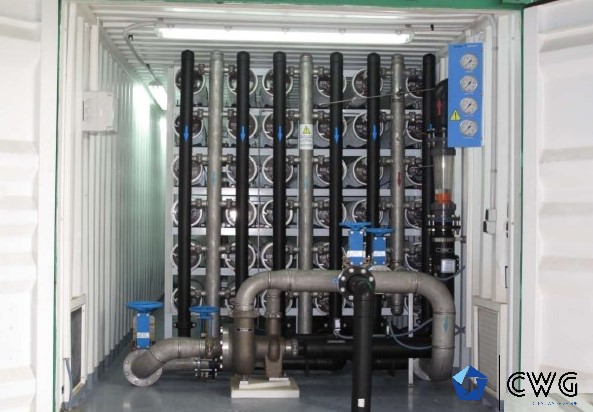 PROJECT INPUTS · DEFINED BATTERY LIMITS
PROJECT DATA CHECKLIST
Send enough information to engineer the whole water service.
Current source-water laboratory analysis and seasonal rangeApplication, daily demand, peak profile and operating hoursRequired product-water quality and final useIntake, feed pressure, source yield and discharge routeElectrical supply, controls, communications and backup powerInstallation space, environment, access and materials constraintsStorage, distribution pumping and availability philosophyDelivery boundary, commissioning, training and service expectations
Send project data RO TECHNICAL GLOSSARY
Use one language across inquiry, design and operation.
Permeate
The treated stream that passes through the RO membrane.
Concentrate
The reject stream carrying salts and constituents retained by the membrane at higher concentration.
Recovery
Permeate flow divided by feed flow. It is limited by chemistry, membrane conditions and process design.
Salt passage
The fraction of feed salts appearing in permeate, interpreted with temperature, pressure and operating condition.
Flux
Permeate production per unit of active membrane area, normally used in membrane projection and performance review.
SDI
Silt Density Index: one indicator of particulate fouling potential, used with other feed-water information.
CIP
Cleaning in place: controlled chemical circulation used to restore performance when verified cleaning criteria are reached.
Duty / standby
Availability arrangement in which one unit operates and another is reserved, subject to shared-system dependencies.
Battery limits
Defined physical and functional interfaces between the supplied treatment package and the surrounding project.
REQUEST TECHNICAL INFORMATION
Need a model datasheet or project-specific documentation?
Reference the application, source-water type and required capacity so the correct DESAL information can be provided.
SEAMASTER WATERMAKER FINDER™
Open Finder Use verified source class and required production for a preliminary match.
The Finder identifies the smallest qualifying catalog starting point. Technical resources explain the inputs required for final engineering.
ENGINEERING RESOURCE FAQ
Answers before you prepare the inquiry.
01What is the minimum information needed for a preliminary selection?
Provide the application, water source, measured conductivity or salinity, required treated water per day, realistic operating hours and available electrical supply. A final proposal requires a current full water analysis and site conditions.
02Can TDS be converted exactly from conductivity?
No universal exact factor applies to every water because the relationship depends on ionic composition and measurement conditions. Use the laboratory TDS and conductivity values when available, and treat field conversions as preliminary estimates only.
03Should RO capacity equal the peak outlet flow?
Usually not. The RO system can produce steadily into storage while the site draws water at a higher short-term rate. Size preliminary RO production from daily treated-water demand and operating hours, then size storage and distribution pumping from the service profile.
04Does the online Finder replace engineering review?
No. The Finder provides a catalog-based starting point. Pretreatment, recovery, guaranteed output, permeate quality, materials, redundancy, energy, intake and discharge remain engineering decisions.
05Can SEAMASTER review an incomplete water analysis?
Yes. Send the available report and source description. The review can identify missing parameters, but final equipment and performance confirmation waits for sufficient verified project data.
READY FOR A TECHNICAL REVIEW?
Send the source, demand, quality target and site conditions.
We will identify the correct DESAL path, missing inputs and next engineering step.