Occupancy curve
Separate staff, guests, contractors and peak occupancy by project phase instead of relying on one headline population.
CAMPS · GLAMPING · TEMPORARY FACILITIES
Build water production around the real mobilization plan: source quality, occupancy stages, storage, utilities, access and the service that must remain available.
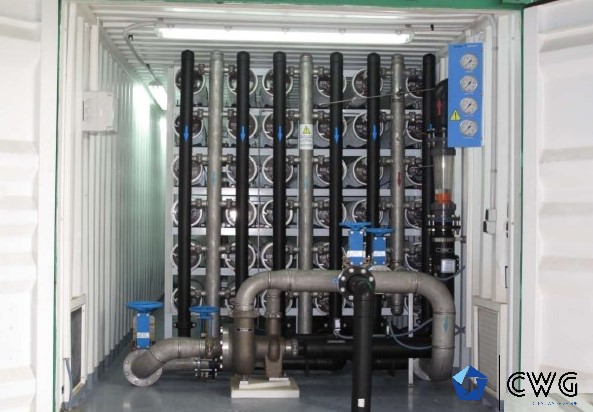
Opening duty, occupancy ramp, peak operation and the later expansion or exit plan can require different operating combinations. The approved daily-demand schedule and available production hours remain the basis.
CAMP DESIGN BASIS
Resolve the changing site duty first; then compare the verified DESAL routes.
Separate staff, guests, contractors and peak occupancy by project phase instead of relying on one headline population.
Confirm seawater or brackish-water chemistry, source yield, turbidity, temperature and seasonal variation before routing equipment.
Align commissioning, occupancy ramp-up, peak operation, expansion and any later relocation with the required water service.
Use treated-water storage to separate stable RO production from short demand peaks and defined interruption coverage.
Verify available voltage, frequency, connected load, backup philosophy, feed-water pumping and communications at every stage.
Transport limits, lifting, civil readiness, consumables, chemicals, operator access and demobilization affect the delivery format.
DAILY DEMAND WORKSHEET
Use owner-approved consumption data, equipment duties or measured values. SEAMASTER does not impose a universal litres-per-person allowance.
| Demand stream | Build the quantity from | Project input to verify |
|---|---|---|
| Accommodation & sanitary | Occupied beds, staff shifts and actual operating schedule | Peak occupancy and fixture profile |
| Kitchen & catering | Meals, food preparation, washing and hygiene duty | Kitchen operating periods and final-water requirement |
| Laundry & cleaning | On-site or outsourced laundry plus housekeeping cycle | Equipment data and cleaning schedule |
| Staff & administration | Permanent teams, visitors, offices and shared facilities | Shift pattern and non-resident users |
| Cooling, landscaping or works | Only uses that genuinely require desalinated water | Water quality, seasonal duty and alternative sources |
| Reserve & interruption cover | Owner-defined service requirement, not a universal percentage | Accepted outage and usable storage volume |
Capacity rule: total approved daily demand ÷ realistic production hours, adjusted only by the agreed reserve. Instantaneous taps and showers are normally served through the distribution and storage design, not by an invented RO peak factor.
SEAMASTER PLATFORM PATH
These published ranges are routing boundaries. Final capacity, recovery, energy use, treatment scope and performance require the current water analysis and approved project duty.
Review product dataCamp wells or boreholes where the measured feed fits a published BWRO configuration and source yield supports the duty.
Explore platformCompact seawater production for smaller facilities or distributed production points with project-defined site interfaces.
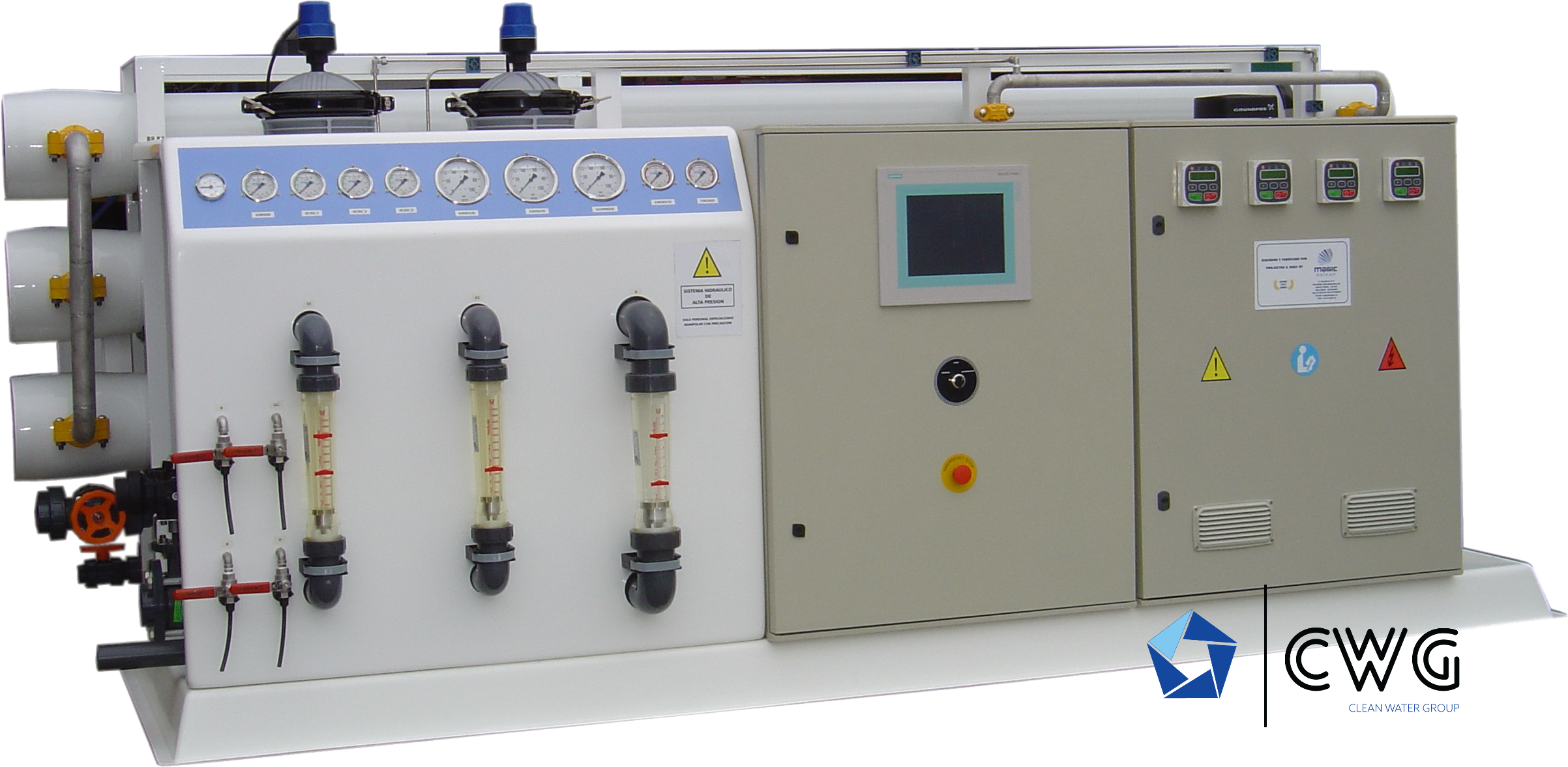
Explore platformEngineered camp or workforce-site supply where pretreatment, availability, controls and phased expansion require one plant design.
Explore platformContainerized delivery where factory integration, transportable modules and reduced site assembly support the deployment plan.
Explore platformPHASED WATER ARCHITECTURE
Phase gates keep demand, shared equipment, storage and site readiness aligned with the actual deployment plan.
Define the first occupied facilities, essential services, commissioning water and the initial source and storage interfaces.
Add accommodation, catering, laundry and staff demand according to the actual mobilization sequence.
Verify the highest simultaneous duty, operating hours, storage turnover and required production availability.
Plan later capacity, permanent conversion, module relocation or demobilization without assuming a fixed project outcome.
Expansion rule: do not assume that nominal capacities can simply be added. Verify shared pretreatment, pumps, post-treatment, controls, storage and the required output with one train unavailable.
SITE-READINESS INTERFACES
Define every connection at the agreed delivery boundary. Temporary infrastructure still needs an approved source, power, drainage, access and operating plan.
Open engineering calculatorsIntake or well, feed pumping, source yield, feed tank and seasonal operating boundary.
Voltage, frequency, connected load, backup source, starting philosophy and power quality.
Usable storage, post-treatment, distribution pressure, turnover and sampling points.
Approved discharge route, hydraulics, environmental requirements and monitoring.
Foundations, drainage, weather protection, access, lifting and maintenance clearances.
Controls, alarms, communications, chemicals, consumables, operators and service support.
 PROJECT DATA · VERIFIED BEFORE SELECTION
DATA FOR CONCEPT DESIGN
CAMP & TEMPORARY-SITE FAQ
No. Occupancy must be combined with the actual accommodation, sanitary, catering, laundry, cleaning, staff and other water uses. Operating hours, storage and the accepted interruption also affect the required production capacity.
There is no universal value on this page. The project owner should provide the design basis or measured consumption for the specific camp standard, climate, fixtures, catering, laundry and operating rules. SEAMASTER then converts the approved daily demand into a production duty.
A phased architecture can be assessed, but train count, shared pretreatment, pumping, storage, controls and site interfaces must be designed for the approved expansion case. This page does not assume that every catalog unit can be combined without engineering review.
No. BOX DESAL can reduce site assembly and define delivery boundaries, but road access, lifting, foundations, intake, discharge, storage, utilities and the future relocation plan still determine the appropriate format.
The electrical design must verify voltage, frequency, power quality, available load, starting behavior, protection, backup philosophy and restart sequence. Final requirements come from the selected system and approved site power study.
READY TO PLAN THE CAMP WATER SYSTEM?
We will identify the correct DESAL route and the remaining inputs required for a project-specific concept.